
Residential Junk Removal Town 'N' Country
Residential junk removal in Town 'N' Country is built around the realities of Florida households—single-family homes, townhomes, apartments, condominiums, and rental residences, each with their own parking, building access, stairs, and property-manager rules. Clean Cut Property Solutions reviews household removal requests as individual projects rather than applying a generic hauling template.
Whether you're clearing accumulated clutter, replacing old furnishings, emptying a garage, or coordinating a move-out, the goal is the same: understand what needs to go, where it sits, and how the property's access shapes the plan. Share the items, the address, and photos when possible, and we will talk through a realistic residential removal.
Residential Items and Project Types
Residential removal spans everyday household belongings and bulky furnishings. The categories below reflect common requests; a whole-house cleanout is handled on its own dedicated page rather than duplicated here.
Unwanted Household Furniture and Items
Living room furniture, bedroom furnishings, dining room items, and unwanted household storage are the most common residential requests. Individual pieces and accumulated belongings are both worth discussing.
Residential Storage and Clutter
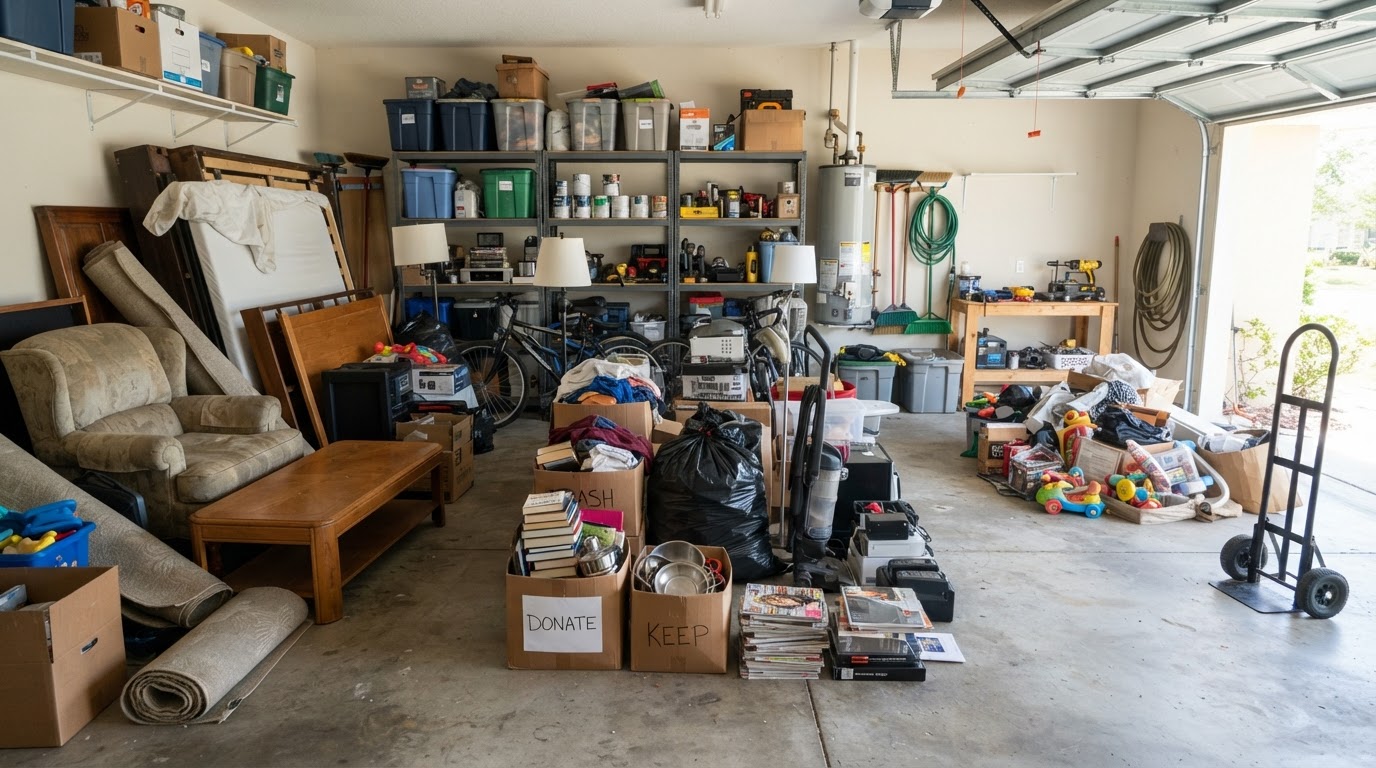
Garage belongings, attic accumulations, and general nonhazardous household clutter build up over years. We sort keepable items you designate from disposable debris so only what you want hauled leaves the property.
Apartment and Condominium Pickup Planning
Apartments and condominiums add building access, elevators, parking limits, and HOA or property-manager rules to the plan. Sharing those conditions up front keeps a residential pickup realistic.
Residential items typically include living room furniture, bedroom furnishings, dining room items, unwanted household storage, garage belongings, apartment move-out items, household appliances, large boxes of unwanted belongings, bulky outdoor household items, and general nonhazardous clutter. Each is reviewed for acceptance and access before any pickup is planned.
Property context matters as much as the items themselves. Single-family homes, townhomes, apartments, condominiums, and rental residences differ in parking, building access, stairs, elevators, and property-manager rules. A driveway pickup at a single-family home and a third-floor apartment clear-out with a shared elevator are very different jobs, and both deserve a plan built around their actual conditions.
This page focuses on household removal rather than the broader whole-house cleanout, which is developed on its own dedicated page. If your project spans an entire home, that page is the better starting point; if it's a room, a set of items, or a specific category, residential junk removal is the right conversation to start.
Planning a Household Junk Removal
A residential inquiry works best room by room: identify the items, photograph item groups, separate what stays from what goes, and share access and occupancy details that affect the plan.
Identify Items Room by Room
Walk the rooms involved and list what needs to go. A room-by-room list is clearer than a single 'some stuff' summary and makes the scope review more accurate.
Photograph Item Groups
Photos of item groups in context—against a wall, in a corner, on a shelf—show volume and access together and help us estimate trailer space honestly.
Separate Keep from Remove
Mark or set aside belongings you want to retain so only designated items are hauled. Clear separation prevents accidental removal of items meant to stay.
Share Access and Occupancy Notes
Note stairs, elevators, narrow halls, pets, children, or scheduling constraints. These details shape how a residential pickup is planned and executed.
Review Scope and Access Together
We review the items, access, and any building rules so the removal plan reflects your household's actual conditions.
Coordinate Timing
Once scope and access are understood, we discuss timing, preparation, and what to expect on pickup day.
Household occupancy, children, pets, clear paths, and access coordination all influence a residential removal without turning it into a hazardous-work project. A clear walking path and separated belongings make pickup smoother; noting pets or children lets us plan around the household's rhythm rather than disrupting it.
Operational claims stay conditional when capabilities are unverified. We won't promise in-home pickup, specific crew sizes, or scheduling slots until a project has been reviewed—what we offer is a direct conversation about your household's actual removal needs.
Preparing a Residential Property for Pickup
A little preparation makes residential removal smoother. These are practical steps and access details that shape the plan.
Access through doors and hallways, staircases, elevators, parking availability, building and HOA access rules, bulk-item dimensions, potential disassembly needs, items containing fluids or hazardous materials, material acceptance, and the estimated number of items all shape a residential pickup. Sharing these up front keeps the estimate honest.
Homeowners should not attempt unsafe lifting or utility disconnections. Heavy items can be staged where practical, but carrying something that risks injury or property damage isn't worth it—describe the situation and let the access and labor be planned during the review.
Apartments and condominiums add a layer of coordination: reserved elevators, loading-dock time windows, parking restrictions, and property-manager approval. Mentioning these in the inquiry prevents surprises and keeps the pickup aligned with building rules.
Residential Junk Removal FAQs
Answers to common questions about household removal, apartments, upstairs items, and combining furniture and appliance pickup.
Request Residential Junk Removal
Send photos, access notes, the project address, and an item description so we can plan a household removal that fits your property. Call 813-857-6752 to talk it through.