
Fence Removal & Demolition Town 'N' Country
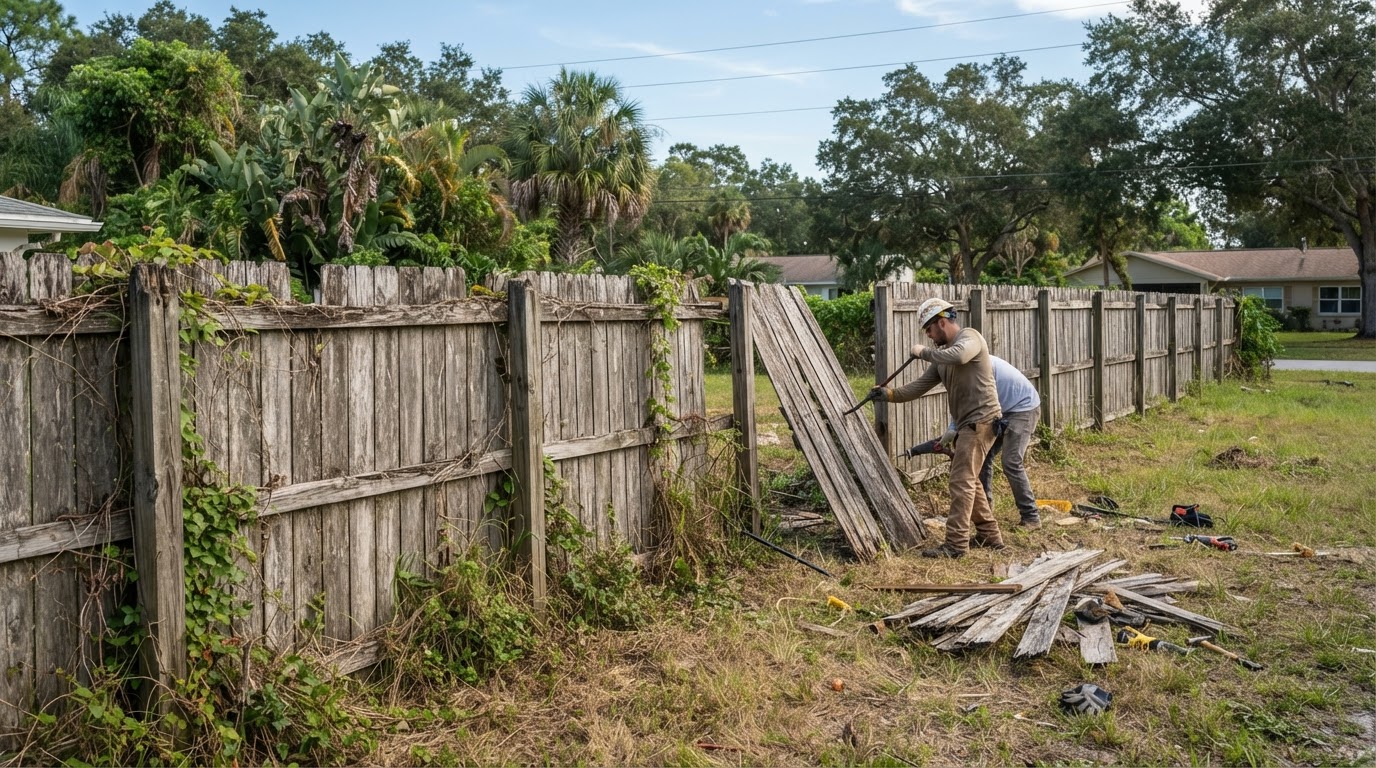
Fence removal and demolition in Town 'N' Country, Florida clears old, damaged, or unwanted fencing so a property line is open for replacement, landscaping, or a cleaner boundary. Clean Cut Property Solutions reviews fence removal inquiries with attention to the fence's material, length, post conditions, and the property access a crew and trailer need to reach the line.
Describe the fence, how much of it is coming down, and where it sits on the property, and we will talk through whether the removal fits our scope. We do not assume every post pulls cleanly or that underground utilities and neighbor permissions are automatically resolved—each fence removal is reviewed on its own conditions.
Fence Types & Removal Scope
Fence demolition covers the dismantling and haul-off of residential fencing. The categories below reflect common removal requests; whether a specific fence can be removed depends on material, length, post conditions, property boundaries, and access confirmed during review.
Wood and Vinyl Fence Removal
Wood privacy fences and vinyl fencing are unbolted, cut, and hauled off panel by panel. Material type drives how the fence comes apart and the debris volume involved.
Chain-Link and Metal Fencing
Chain-link fencing and selected metal fencing come apart differently than wood or vinyl—tension bands, posts, and concrete footings each require their own dismantling approach.
Fence Posts, Gates & Footings
Old posts, fence gates, and post footings set in concrete are part of the fence system. Whether concrete footings are pulled or cut below grade is reviewed against the property and your goals.
Fence removal covers wood privacy fences, vinyl fencing, chain-link fencing, selected metal fencing, fence panels, fence gates, damaged sections, and full fence-line removal. Each material comes apart differently—wood panels unbolt or cut, vinyl snaps at the rails, and chain-link rolls off the tension bands and posts. Old posts, post footings and concrete, and fence debris are all part of the system.
It is worth distinguishing limited section removal from an entire fence-line project. Taking out a few damaged panels between two posts is a different scope from removing a full property-line fence, and the two call for different labor and debris planning. We review how much of the fence is actually coming down rather than treating every fence as a full removal.
We do not advertise fence installation, and we do not guarantee removal of every underground footing or restoration of landscaping after the fence comes out. Post pulling, concrete breaking, and any landscaping repair are reviewed against the actual fence, the terrain, and what you want left behind.
Fence Removal Coordination
A fence removal follows a practical sequence: document the fence's length and material, review post conditions and footings, confirm property boundaries and any shared-fence or HOA considerations, locate underground utilities, and plan the dismantling and haul-off.
Share Fence Length & Height
Provide the approximate linear footage of fence coming down and its height. Length and height drive the labor and debris volume for the removal.
Identify Materials
Note whether the fence is wood, vinyl, chain-link, or metal. Material type drives how the fence comes apart and the hauling plan.
Review Post Conditions & Footings
Describe whether posts are sound, rotted, or set in concrete. Footing removal—pulled, cut below grade, or left in place—is reviewed against the property.
Confirm Property Boundaries
Note whether the fence sits on your property line, a shared boundary, or an HOA-controlled line. Boundary ownership and approvals are confirmed before work proceeds.
Locate Underground Utilities
Flag any buried utility lines, irrigation, or easements near the fence posts. Underground utilities affect how posts are removed safely.
Plan Dismantling & Haul-Off
We review the fence, posts, and access together so the dismantling sequence and debris hauling plan reflect what is actually on site.
Boundary ownership and approval should be confirmed before fence removal work proceeds. A shared property-line fence may require neighbor permission, and an HOA-controlled fence line may have approval or replacement requirements. We do not portray fence removal as permission to enter neighboring property—access and authority are confirmed before any dismantling begins.
Underground utilities are a real consideration when posts are set in the ground. Irrigation lines, electrical runs to landscape lighting, and utility easements can sit near a fence line, and post removal needs to account for what is buried rather than pulling blindly. Photos showing the fence line, post spacing, and any nearby utility markers help frame the plan.
Preparation & Estimate Factors
Fence removal estimate factors reflect the fence's length, material, post conditions, and terrain—not a flat rate. These factors shape the conversation about your project.
Linear footage and post count are the starting points. A short run of damaged panels and a full property-line fence produce very different labor and debris volumes. Material type—wood, vinyl, chain-link, or metal—drives how the fence comes apart, and concrete footings set around posts add breaking and hauling work.
Terrain and vegetation matter. A fence line running through sloped ground, dense shrubs, or tree roots is harder to dismantle and haul than a straight run over flat lawn. Access to the fence line—gate width, side-yard entry, and how far debris carries to the trailer—all shape the labor plan.
Buried utility considerations, debris quantity, and site conditions all influence the estimate. We do not guarantee removal of every underground footing or restoration of landscaping after the fence comes out—those are reviewed against the actual terrain and what you want left behind. Permit or approval requirements, where applicable, are confirmed against the property and the applicable jurisdiction rather than assumed away.
Fence Removal & Demolition FAQs
Direct answers about fence removal, materials, posts, shared boundaries, utilities, and estimate factors in Town 'N' Country.
Discuss Fence Removal & Demolition
Share the fence's length, height, materials, gate information, photographs of the line, and access conditions so we can review the removal scope honestly. Prefer to talk it through? Call 813-857-6752.