
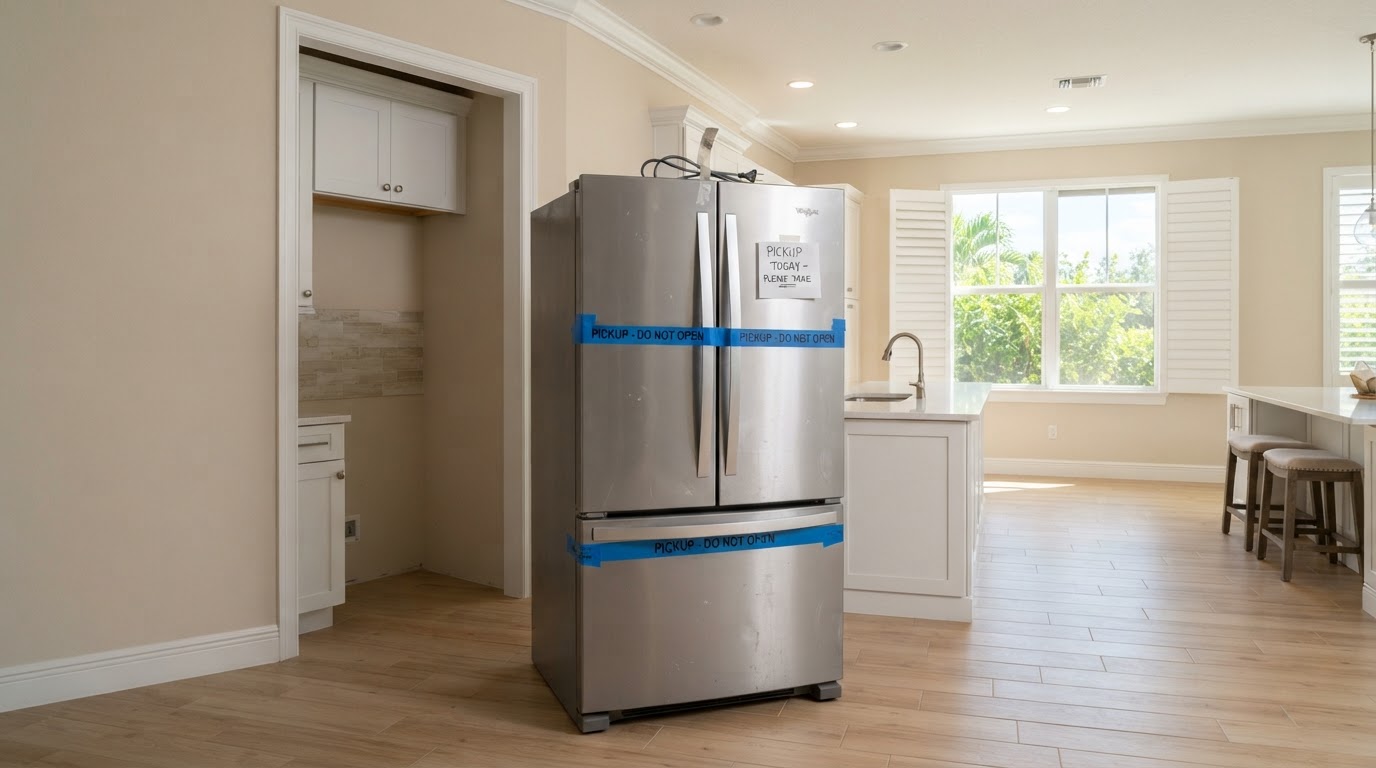
Refrigerator & Freezer Removal Town 'N' Country
Refrigerator and freezer removal in Town 'N' Country is a specialized page within appliance removal because refrigerant-containing appliances introduce handling and disposal considerations that must not be oversimplified. Clean Cut Property Solutions reviews refrigerator and freezer pickup requests with attention to size, type, access, and the appropriate handling requirements that apply.
Large refrigeration appliances require accurate sizing, access information, and appropriate handling arrangements. Share the appliance type, dimensions, where it sits, and any access details, and we will talk through a pickup plan that treats the unit's refrigerant system with the care it requires.
Refrigerator and Freezer Types
Refrigerator and freezer removal spans household refrigerators and standalone freezers, each with different footprints, weights, and access considerations.
Household Refrigerator Removal
Top-freezer, bottom-freezer, side-by-side, French-door, counter-depth, large-capacity, and compact refrigerators each have different footprints, weights, and door-clearance needs that shape the pickup plan.
Upright and Chest Freezers
Upright freezers and chest freezers carry their own weight and dimension considerations. Chest freezers in particular can be heavy and awkward, affecting carrying conditions and trailer space.
Oversized and Difficult-Access Refrigeration Units
Large-capacity and built-in refrigeration units add cabinet, trim, and access considerations. Narrow doorways, tight turns, and upper-floor placement all change the plan.
Refrigerator and freezer types include top-freezer, bottom-freezer, side-by-side, French-door, counter-depth, large-capacity, and compact refrigerators, plus upright and chest freezers. Each carries different footprint, weight, door-clearance, mobility, placement, and access-path considerations.
Differences in footprint, weight, door clearance, mobility, placement, and access paths all shape how a refrigeration unit is moved. A compact refrigerator staged at curb level and a built-in French-door unit on a second floor are very different jobs, and both deserve a plan built around their actual conditions.
Potential refrigerant-system handling requirements apply to these appliances. We do not instruct customers to cut, pierce, vent, drain, or dismantle a refrigerant system, and we do not represent Clean Cut as a licensed refrigerant technician or refrigerant recovery provider without confirmation—those handling considerations are reviewed honestly during the project discussion.
Preparing a Refrigerator or Freezer for Pickup
Refrigeration pickup planning identifies the unit, its placement, its access path, and any condition or connection details that affect handling.
Provide Appliance Type and Dimensions
Note the type—top-freezer, side-by-side, chest freezer—and the dimensions. Size and type shape carrying conditions and trailer space.
Describe Built-In or Freestanding Status
Share whether the unit is built-in or freestanding. Built-in units add cabinet, trim, and utility coordination to the plan.
Identify Floor Level
Note the floor level and whether stairs or an elevator are involved. Upper-floor placement changes labor and equipment needs.
Document Narrow Doorways or Turns
Tight doorways, hallway turns, and stairwell landings affect whether a unit can be moved as-is or needs a different approach.
Disclose Appliance Condition
Share any damage, age, or handling-relevant condition honestly. Condition affects handling and disposal-acceptance review.
Note Food, Water, and Electrical Considerations
Remove food contents, and note water connections and electrical considerations. Defrosting applies only when appropriate and confirmed.
Food and contents removal, water connections, electrical connection considerations, defrosting requirements only when appropriate and confirmed, and access through hallways, stairs, and elevators all shape a refrigeration pickup. Customers should not attempt to cut, pierce, vent, drain, or dismantle a refrigerant system—those actions carry safety and regulatory consequences.
We do not represent Clean Cut as a licensed refrigerant technician or refrigerant recovery provider without confirmation. Refrigerant-system handling, when it applies, is reviewed honestly during the project discussion so the plan reflects what can and cannot be done on pickup day.
Handling Restrictions and Estimate Factors
Refrigerant-containing appliances carry handling and disposal considerations that shape both acceptance and the estimate conversation.
Appliance handling and downstream processing must comply with applicable requirements. Refrigerant-containing systems, authorized handling, disposal-facility acceptance, appliance dimensions, weight, obstructions, loading distance, floor level, preparation condition, and multiple-unit inquiries all shape a refrigeration removal plan.
We do not invent Florida disposal regulations, facility relationships, or fees. Disposal destination and any applicable handling requirements are confirmed during the review based on the appliance's condition and the rules that apply to it—not assumed or fabricated.
We do not imply refrigerant systems can be vented into the atmosphere. Refrigerant handling, when it applies, follows applicable requirements that are reviewed honestly during the project discussion rather than bypassed for convenience.
Refrigerator & Freezer FAQs
Answers about refrigerator sizes, chest freezers, food removal, stairs and doorways, disposal considerations, and combined pickups.
Discuss Refrigerator or Freezer Removal
Share the appliance type, dimensions, placement, connections, and access so we can plan a refrigeration pickup that treats the unit's handling requirements honestly. Call 813-857-6752.