
Appliance Removal & Disposal Town 'N' Country
Appliance removal and disposal in Town 'N' Country covers the broad category of large household appliances—stoves, ranges, ovens, dishwashers, microwaves, washers, dryers, refrigerators, and freezers. Clean Cut Property Solutions reviews appliance pickup requests with attention to category, dimensions, connection status, property access, and acceptance requirements.
Appliances connected to gas, water, or hardwired electric introduce disconnection considerations that must be handled before removal. Share the appliance type, size, location, and any loading restrictions, and we will talk through a pickup plan that fits the unit and the property.
Common Appliance Removal Categories
Appliance removal spans kitchen and laundry units. Refrigerators/freezers and washers/dryers each have dedicated pages with deeper handling detail.
Kitchen Appliance Removal
Stoves, ranges, ovens, dishwashers, and microwaves are common kitchen appliance removals. Gas, water, or hardwired connections may require qualified disconnection before removal.
Laundry Appliance Removal
Washing machines and dryers are hauled when water, drain, electrical, or gas connections are safely disconnected. A dedicated washer and dryer page covers the deeper detail.
Oversized and Built-In Appliance Considerations
Built-in and oversized appliances add cabinet, trim, and utility coordination to the plan. Refrigerant-containing units are addressed on a dedicated refrigerator and freezer page.
Common appliance removal categories, subject to capability and material acceptance, include stoves, ranges, ovens, dishwashers, microwaves, washing machines, dryers, refrigerators, freezers, and selected other large household appliances. Each is reviewed for type, size, and connection status before pickup is planned.
Specific distinctions matter: appliances connected to gas, appliances connected to water, hardwired appliances, refrigerant-containing appliances, built-in appliances, and freestanding appliances each carry different disconnection and handling considerations. A gas range, a hardwired oven, and a freestanding dishwasher are not the same job.
Disconnecting utilities or refrigerant-related components may require appropriately qualified professionals before removal. Clean Cut does not perform plumbing, gas disconnection, electrical work, or refrigerant handling unless verified—those disconnections are the customer's responsibility to arrange with qualified parties before pickup day.
How Appliance Pickup Is Planned
Appliance pickup planning identifies the unit, its connections, its access path, and any disconnection that must happen before removal.
Identify the Appliance
Note the type, brand, and model when possible. The appliance type shapes handling, acceptance, and any connection-related considerations.
Count Units and Dimensions
Share how many units and their approximate dimensions. Multiple appliances in one pickup change trailer space and crew planning.
Share Photos and Placement
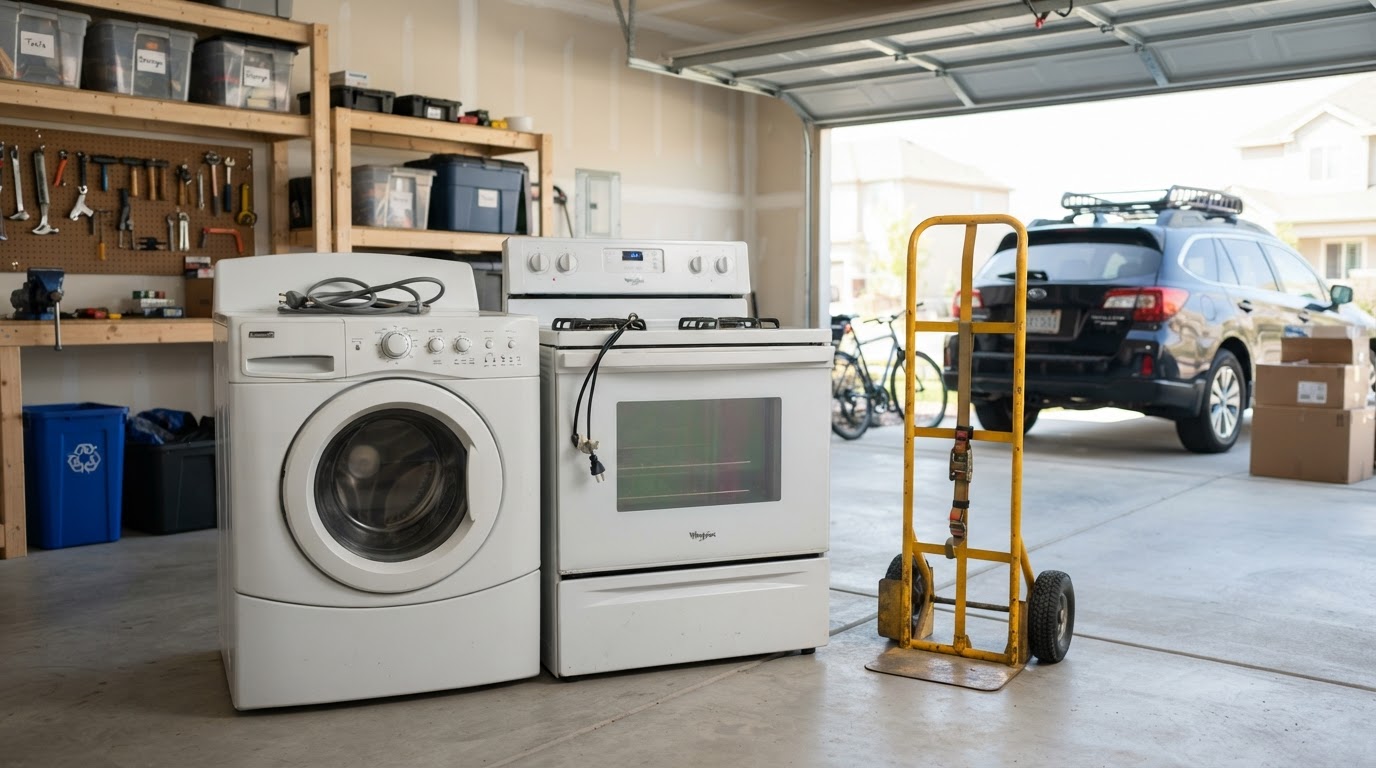
Photos show the unit in context—against a wall, built into cabinetry, or staged in a garage—and clarify size and access.
Note Staircases, Elevators, and Door Clearance
Stairs, elevators, and door clearance affect whether an appliance can be moved as-is or needs a different carrying approach.
Identify Utility Connections
Note gas, water, drain, electrical, or hardwired connections. Some disconnections require qualified professionals before removal.
Confirm Pickup Access and Material Acceptance
Where a trailer can park and whether the appliance is accepted for disposal shape the final plan.
Built-in installations, utility connections, necessary disconnections, pickup access, and material acceptance all shape an appliance pickup. Customers should not perform unsafe disconnections or dismantle systems with hazardous components—gas lines, refrigerant systems, and hardwired electric connections are the responsibility of qualified parties.
Describing the appliance, its connections, and its access path up front keeps the plan realistic. A freestanding dishwasher at curb level and a built-in wall oven on a second floor are very different jobs, and both deserve a plan built around their actual conditions.
Appliance Preparation and Estimate Factors
Weight, size, floor level, connection status, and disposal requirements shape both the plan and the estimate conversation.
Weight, size, floor level, handling constraints, whether disconnection is complete, potential appliance-specific handling restrictions, disposal requirements, quantity, travel and loading conditions, and site accessibility all shape an appliance removal plan. These factors drive the estimate conversation rather than a fixed price.
We do not promise refrigerant recovery, certified recycling, or disposal at a named facility. Refrigerant-containing appliances have specific handling and disposal considerations addressed on the dedicated refrigerator and freezer page—acceptance and destination are confirmed during review rather than assumed.
Customers should ensure relevant disconnections are safely completed by qualified parties before pickup. A gas line, a water supply, or a hardwired electric connection left live creates a safety risk that no hauling plan should work around—disconnection comes first, removal second.
Appliance Removal FAQs
Answers about appliance categories, combined pickups, disconnection, built-in units, and refrigerators and freezers.
Request Appliance Removal
Tell us the appliance type, size, location, and any loading restrictions, and attach photos so we can plan a pickup that fits the unit and the access. Call 813-857-6752.