
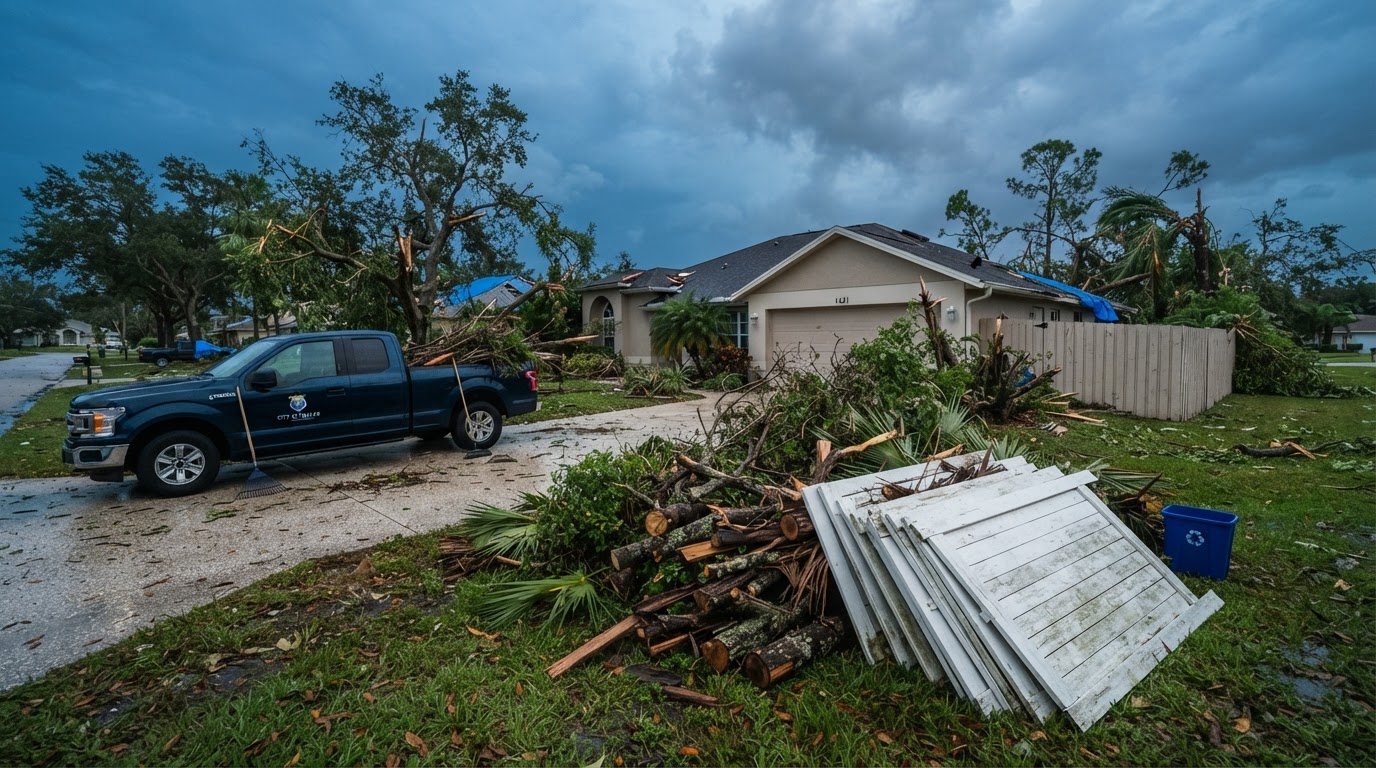
Hurricane & Storm Debris Removal Town 'N' Country
Hurricane and storm debris removal in Town 'N' Country, Florida is the hauling of suitable storm-related debris after site conditions are safe and materials can be assessed. Clean Cut Property Solutions reviews storm-debris inquiries with attention to what is actually on the ground, how it can be reached, and the volumes involved.
This is an evergreen storm-debris service page. We do not operate during an active hurricane, claim disaster-response contracts, or promise 24/7 emergency availability. Share the property address, photos of the debris piles, material categories, an estimated volume, and the access conditions so we can review the scope honestly.
Storm Debris Categories & Property Types
Storm debris removal covers the haul-off of safely accessible, nonhazardous storm-related materials. The categories below reflect common requests; whether a specific load can be collected depends on site safety, material acceptance, and access confirmed during review—not a blanket storm-cleanup scope.
Fallen Branches & Vegetation
Previously cut fallen branches, brush and vegetation debris, and downed limbs that have been safely assessed and moved to a collection point. Storm vegetation removal is distinct from emergency tree work or unstable tree removal.
Damaged Outdoor Property Materials
Detached fence panels, damaged outdoor furniture, loose storm-related property debris, and detached nonhazardous exterior materials staged for collection after winds have passed and access is safe.
Residential Storm Cleanup Debris
Suitable bagged cleanup materials and selected damaged household items that can be hauled as ordinary nonhazardous debris once the property is safe to work on and materials are identified.
Within storm debris removal, the range runs from a pile of previously cut branches and detached fence panels to a larger mixed load of vegetation, damaged outdoor items, and loose property debris. Previously cut fallen branches, brush and vegetation debris, detached fence panels, damaged outdoor furniture, nonhazardous yard debris, selected damaged household items, detached nonhazardous exterior materials, loose storm-related property debris, and suitable bagged cleanup materials all fall under storm debris hauling when conditions allow.
It is important to distinguish the collection of safely accessible debris from the work this page does not cover. Emergency tree work on unstable or hanging limbs, structural removal of damaged buildings, utility restoration, and hazardous-material remediation are separate specialties. We haul what has been safely assessed and staged for collection; we do not perform those higher-risk services.
Florida storm debris can also interact with municipal collection programs after a declared event. We do not claim approval for, coordination with, or eligibility under any municipal disaster-debris collection program, and we do not represent that storm debris hauling qualifies for insurance reimbursement. Those are confirmed against the actual event and the applicable jurisdiction rather than assumed.
Storm Cleanup Planning & Coordination
A storm debris project follows a careful sequence: confirm conditions are safe, identify the damaged materials, document volume and access, and confirm collection arrangements before any hauling is scheduled.
Confirm Conditions Are Safe
Before any debris review, confirm the property is safe to access—no downed power lines, no unstable structures, and no active hazards. Safety comes first; hauling is reviewed only after conditions allow.
Identify Damaged Materials
List the categories of debris on the property—cut branches, detached fencing, damaged outdoor furniture, bagged cleanup material. Material identification determines what can be hauled.
Photograph Debris Piles
Photos of each pile or staging area frame the volume and the types of material involved. Clear pictures keep the estimate discussion accurate and reduce surprises.
Check Loading Access
Describe where the debris sits and how a truck or trailer would reach it. Blocked gates, soft ground, or narrow side yards all affect how a load can be collected.
Flag Utility & Structure Hazards
Note any downed structures, utility hazards, or debris near power lines. Those are identified for specialist handling rather than ordinary hauling.
Confirm Collection Arrangements
Once materials, volume, and access are understood, the collection arrangement and timing are reviewed with the authorized property representative before any hauling proceeds.
We do not suggest that customers approach downed electrical lines, unstable structures, or hanging limbs. If debris is near power lines or an unstable tree, that work belongs to utility crews or qualified tree-service specialists—not ordinary debris hauling. Safety is reviewed before any collection is planned.
Coordination with the authorized property representative is part of planning. For an occupied home that is usually the owner; for a rental or managed property it may be a property manager or authorized contact. Photos, an estimated volume, and a clear description of the access path keep the conversation grounded in what is actually on site.
Limitations & Estimate Factors
Storm debris estimate factors reflect real volume, weight, moisture, and access conditions—not a flat storm-cleanup rate. These factors shape the conversation about your project.
Debris volume and weight are the starting points, and wet materials change both. Storm-soaked branches and saturated debris are dramatically heavier than dry material, and a wet mixed pile hauls differently from the same load after it has dried. Mixed material piles—vegetation tangled with fencing, outdoor furniture, and loose debris—take longer to sort and load than clean, separated piles.
Large limbs, unstable trees, and downed structures are a different scope from ordinary debris hauling. Electrical hazards and floodwater contamination are real considerations after a storm; if suspected hazardous materials or contaminated floodwater are present, those are referred to qualified specialists rather than handled as ordinary debris.
Access obstructions, disposal restrictions, and potential municipal debris-collection requirements all influence the estimate. We do not claim municipal disaster collection approval or insurance reimbursement eligibility. The estimate reflects the real debris, the real access, and the real material acceptance—not a fixed storm-cleanup price.
Hurricane & Storm Debris Removal FAQs
Direct answers about what storm debris can be hauled, mixing materials, emergency tree work, hazards, and availability during active storms in Town 'N' Country.
Discuss Storm Debris Removal
Share the property address, photos of the debris piles, material categories, an estimated volume, and the access conditions so we can review the storm-debris scope honestly. Prefer to talk it through? Call 813-857-6752.