
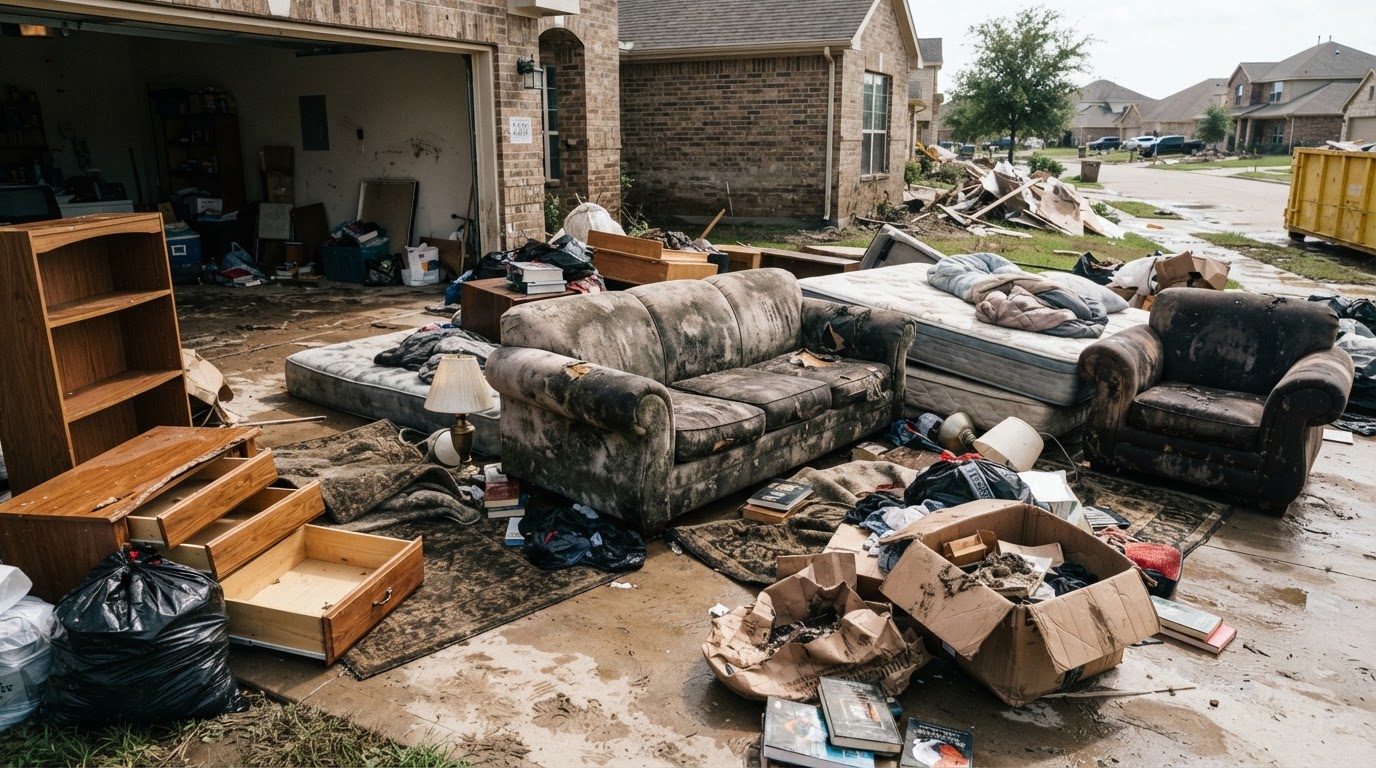
Flood-Damaged Contents Removal Town 'N' Country
Flood-damaged contents removal in Town 'N' Country, Florida is the hauling of suitable furniture and household belongings that have been damaged by flooding—after environmental and structural safety concerns have been assessed. Clean Cut Property Solutions reviews these inquiries with attention to the water-damage circumstances, the condition of the items, and what is safe to handle.
This is contents hauling, not water remediation. We do not perform water extraction, structural drying, mold remediation, sewage cleanup, or flood restoration. Share photos, the item categories, the water-damage circumstances, the current property condition, and the authorized access information so the scope can be reviewed honestly.
Flood-Damaged Content Categories & Property Types
Flood-damaged contents removal covers the haul-off of suitable water-damaged furniture and household belongings. The categories below reflect common requests; whether a specific item can be hauled depends on condition, contamination, material acceptance, and safety confirmed during review.
Water-Damaged Furniture
Damaged couches, upholstered furniture, wooden furniture, and cabinets or loose furnishings affected by clean-water exposure or suspected contaminated floodwater, subject to condition and acceptance.
Flood-Affected Household Belongings
Household belongings, stored items, mattresses subject to condition and acceptance, and selected nonhazardous water-damaged materials accumulated after flooding—once the items are safe to handle.
Contents Removal After Assessment
Other approved contents reviewed after the property has been assessed for structural stability, electrical hazards, and potential contamination—so hauling proceeds only when it is safe to handle the items.
Within flood-damaged contents removal, the range runs from a soaked couch and a few water-damaged boxes to a full household of saturated furniture, bedding, and stored belongings. Damaged couches, upholstered furniture, wooden furniture, mattresses subject to condition and acceptance, cabinets or loose furnishings, household belongings, stored items, selected nonhazardous water-damaged materials, and other approved contents all fall under this scope when conditions allow.
It is important to distinguish clean-water exposure from situations involving potentially contaminated floodwater, without declaring any particular property or item safe. Floodwater can carry contaminants, and items that sat in contaminated water may require different handling, acceptance review, or specialist remediation before ordinary hauling can proceed. We do not declare items safe; we review the condition and the circumstances.
Contents removal is also distinct from the remediation the building itself may need. Hauling soaked furniture out of a flooded room does not dry the room, address the water source, or remediate mold that may already be developing. Those are separate specialist scopes. We focus on the safe haul-off of the damaged contents once it is appropriate to do so.
Contents Removal Coordination
A flood-damaged contents project follows a careful sequence: confirm the property is safe to access, identify the water-damage circumstances, determine items authorized for removal, document condition, and clarify loading and disposal arrangements.
Confirm Property Access Is Safe
Before any hauling, confirm the property is safe to enter—no active electrical hazards, no structural instability, and no unresolved contamination. A qualified restoration provider may need to assess the property first.
Identify Water-Damage Circumstances
Describe the water source and how long items were exposed. Clean-water exposure and potentially contaminated floodwater are reviewed differently, and the circumstances affect handling and acceptance.
Determine Items Authorized for Removal
List the items you want hauled away and confirm the person directing the removal is authorized to do so. Items to keep are identified and protected from accidental removal.
Describe Condition & Material Types
Note the condition of each item category—saturated, dried, suspected contamination, suspected mold—and the material types. Condition and material drive whether items can be hauled as ordinary debris.
Photograph Item Groups
Photos of the damaged items and the spaces they sit in frame the volume, condition, and loading path. Clear pictures keep the estimate grounded in what is actually on site.
Clarify Loading & Disposal
Confirm where items will be carried out, how the load will be hauled, and the disposal arrangements. Suspected contamination or hazardous materials are flagged for specialist handling.
Where applicable, we coordinate with property owners or qualified restoration providers rather than implying an existing restoration partnership. A restoration professional may need to assess the property before contents hauling proceeds, especially where contamination, mold, or structural concerns are involved. We do not imply such a partnership exists.
Removing contents does not make a flood-damaged building safe and does not replace remediation. Water extraction, structural drying, mold remediation, sewage cleanup, and flood restoration are separate specialist scopes. We focus on the haul-off of the damaged items, reviewed against the actual conditions and the authorized access, not on remediating the building.
Safety, Limitations & Estimate Factors
Flood-damaged contents estimate factors reflect real contamination, condition, weight, and access conditions—not a flat hauling rate. These factors shape the conversation about your project.
Potential contamination, suspected mold, sewage exposure, structural instability, and electrical hazards are the first considerations. If any of those are present, the property may need specialist remediation before ordinary hauling can safely proceed. We do not advertise mold removal, biohazard cleanup, sewage cleanup, water extraction, or structural drying.
Saturated-item weight is a real factor. A soaked sofa or mattress weighs far more than the same item dry, and water-damaged furniture can be heavy, fragile, or both. Stairs, access, and loading distance all affect how the load can be moved, and item condition determines whether it can be handled as ordinary debris.
Material acceptance, protective handling requirements, and disposal restrictions round out the estimate. We do not claim that every water-damaged item is accepted or that disposal destinations are guaranteed. The estimate reflects the real items, the real condition, and the real access—not a fixed flood-contents price.
Flood-Damaged Contents Removal FAQs
Direct answers about what flood-damaged contents can be hauled, remediation boundaries, contamination handling, weight, and estimate factors in Town 'N' Country.
Discuss Flood-Damaged Contents Removal
Share photos, the item categories, the water-damage circumstances, the current property condition, and the authorized access information so we can review the contents-hauling scope honestly. Prefer to talk it through? Call 813-857-6752.